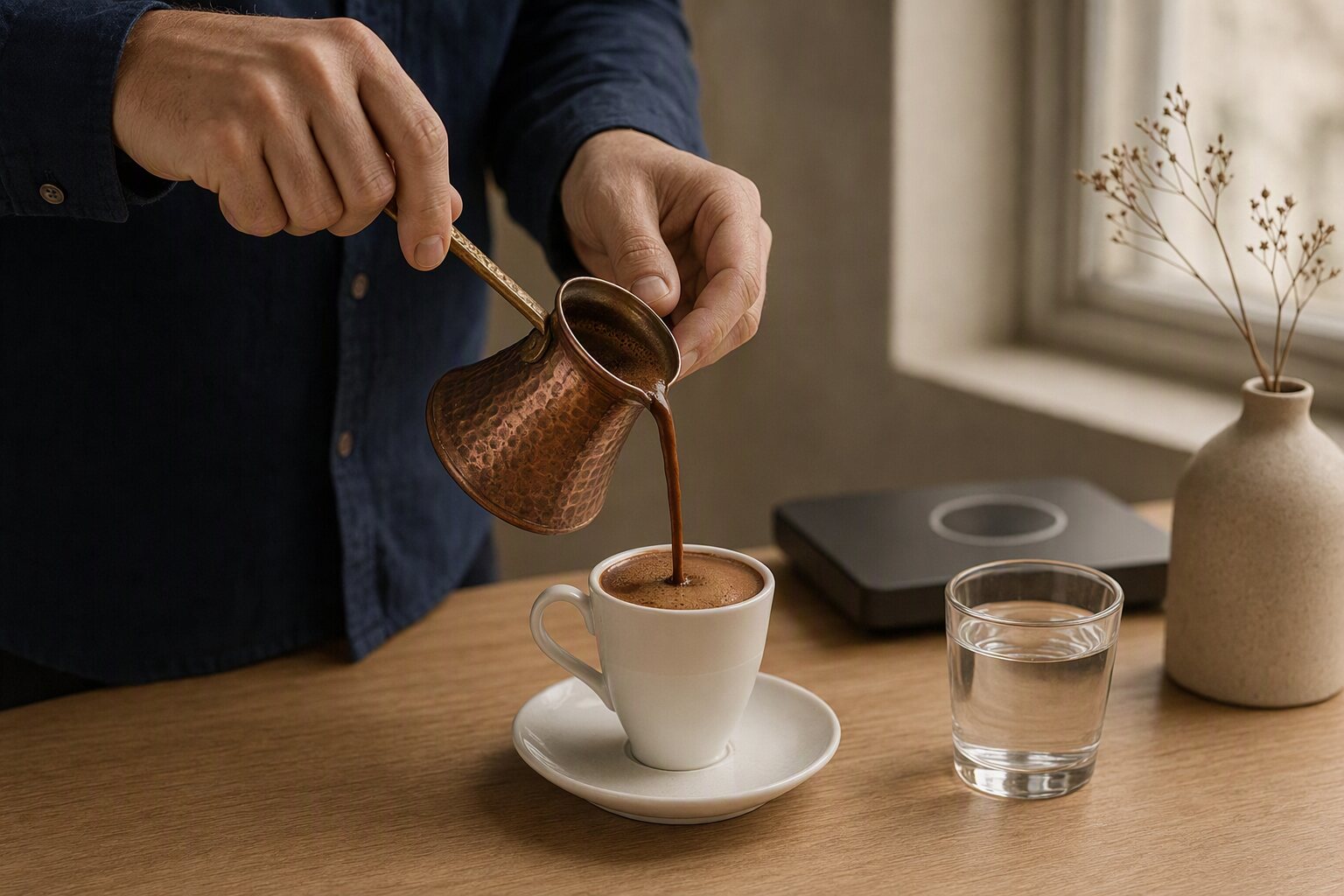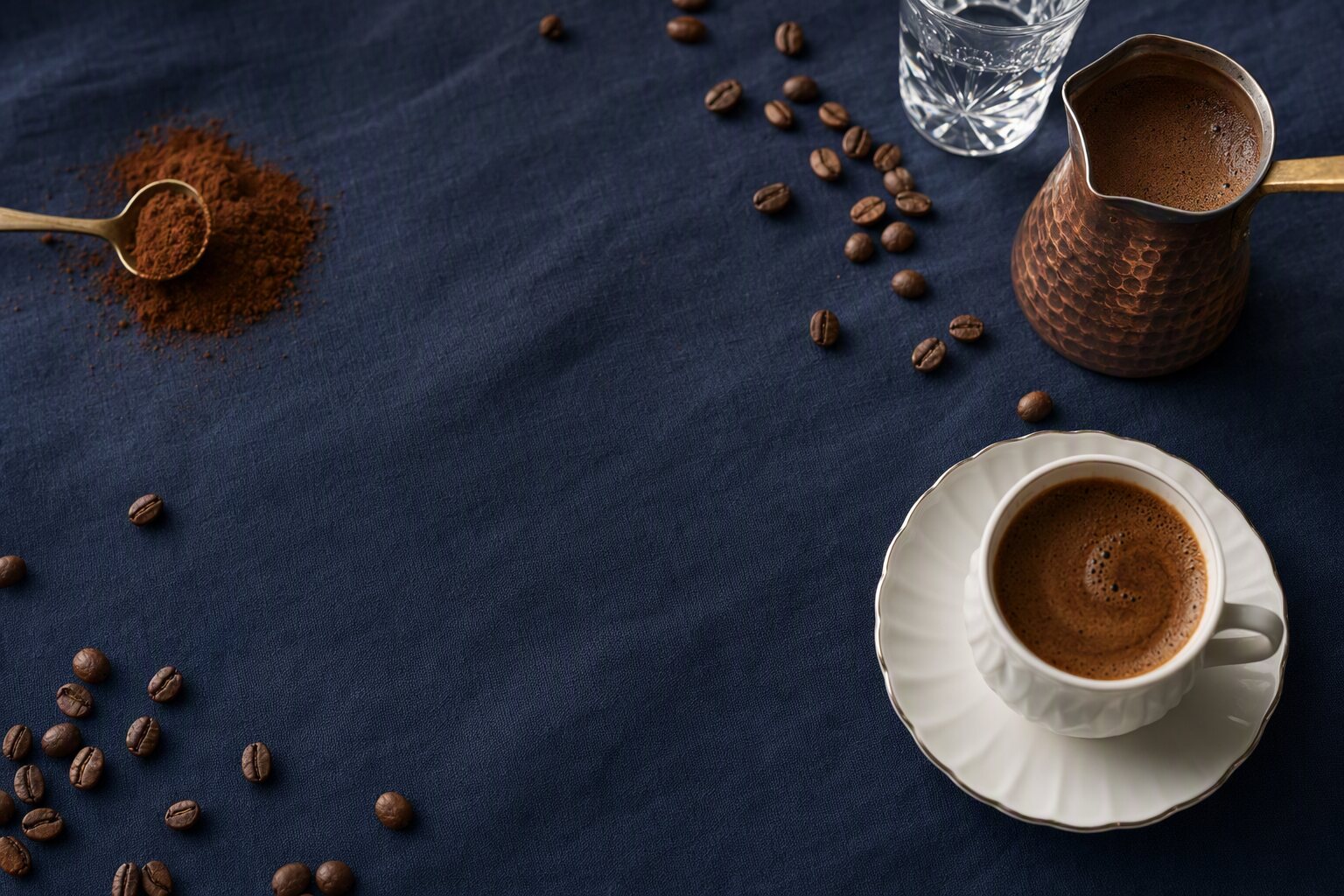
Specialty Turkish coffee is Turkish coffee made from specialty-grade beans: coffee that scores 80 or more out of 100 in cupping and has no taste defects. Traditional Turkish coffee is usually made from commercial-grade beans such as Brazilian Rio Minas, roasted darker. In specialty Turkish coffee the flavours of the bean's origin, such as fruit, flowers or chocolate, come through in the cup.
What does specialty mean?
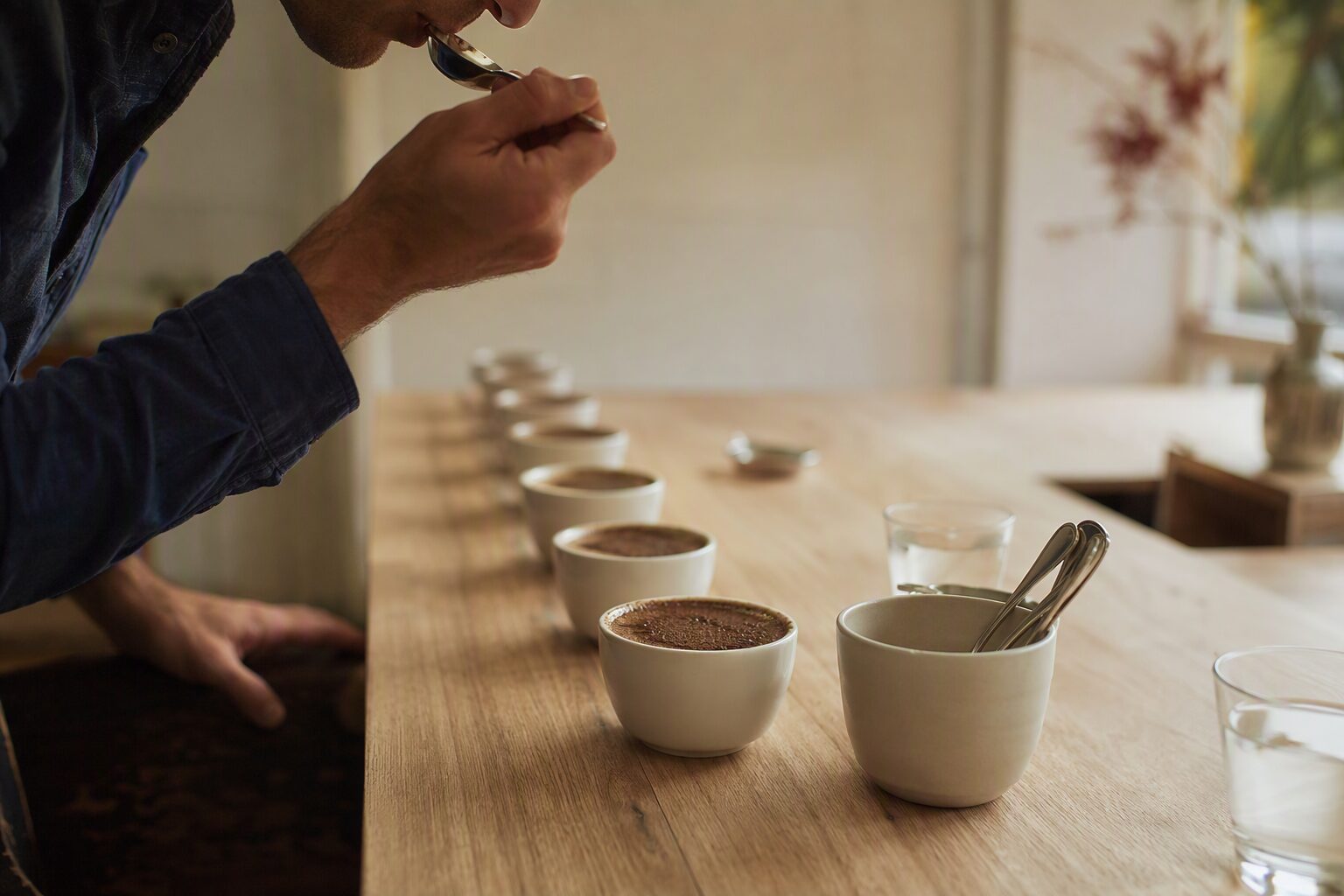
The definition rests on the standards of the Specialty Coffee Association (SCA). By the common industry definition, a specialty coffee:
- scores 80 or more out of 100 with trained cuppers,
- has no serious defects in green-bean grading,
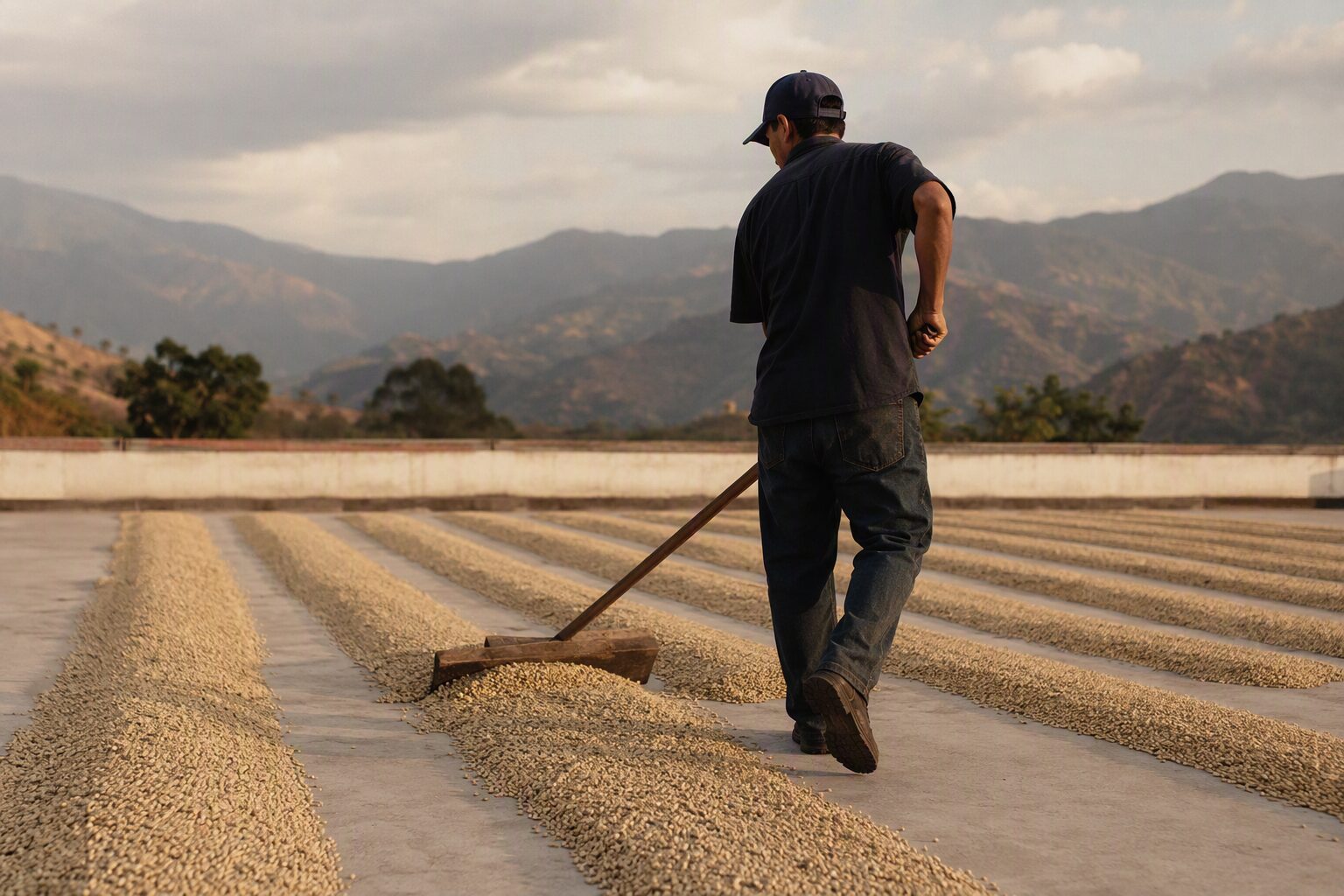
- is traceable to a country, region, farm or cooperative.
The SCA recently renewed its evaluation method as the “Coffee Value Assessment”, but the 80-point threshold is still the common shorthand for specialty.
How it differs from traditional Turkish coffee
| Traditional Turkish coffee | Specialty Turkish coffee | |
|---|---|---|
| Beans | Usually commercial-grade Arabica such as Brazilian Rio Minas | Scores 80+, single origin or blend with known origins |
| Roast | Medium-dark to dark | Light to medium, to keep the origin flavours |
| Taste | Strong, familiar, slightly sharp | Fruity, floral or chocolatey; sweeter and cleaner |
| Foam | Thick and lasting | Thick when freshly roasted; a little lighter in colour |
| Traceability | Usually country level | Region, farm, process and score |
Which one is better is a matter of taste. Turkish coffee culture is on UNESCO's list of Intangible Cultural Heritage; specialty Turkish coffee doesn't replace that tradition, it adds new flavours to it.
Is our Turkish coffee specialty?
No. Our signature Turkish coffee is Brazilian Rio Minas, the bean that gives Turkish coffee its traditional taste. We roast it fresh, grind it for your order and print the roast date on every bag, but we don't call it specialty. This article explains what Rio Minas is.
To try specialty Turkish coffee, order one of our coffees of the month with the “Turkish coffee” grind. Each comes from a traceable lot, and its product page lists the region, process and score.
“A specialty coffee in the cezve makes a fruitier, sweeter cup than most people expect. We suggest tasting the two side by side.”
— Roaster Lab
How to make it at home
- Use 70 ml of cold water and 7 g of coffee per cup.
- Add sugar at the start and stir once.
- Heat gently without boiling; take it off when the foam rises.
- Share the foam between the cups, then pour the rest slowly.
Lighter-roasted specialty coffees are less bitter, so most people use less sugar. Step by step in our cezve guide.