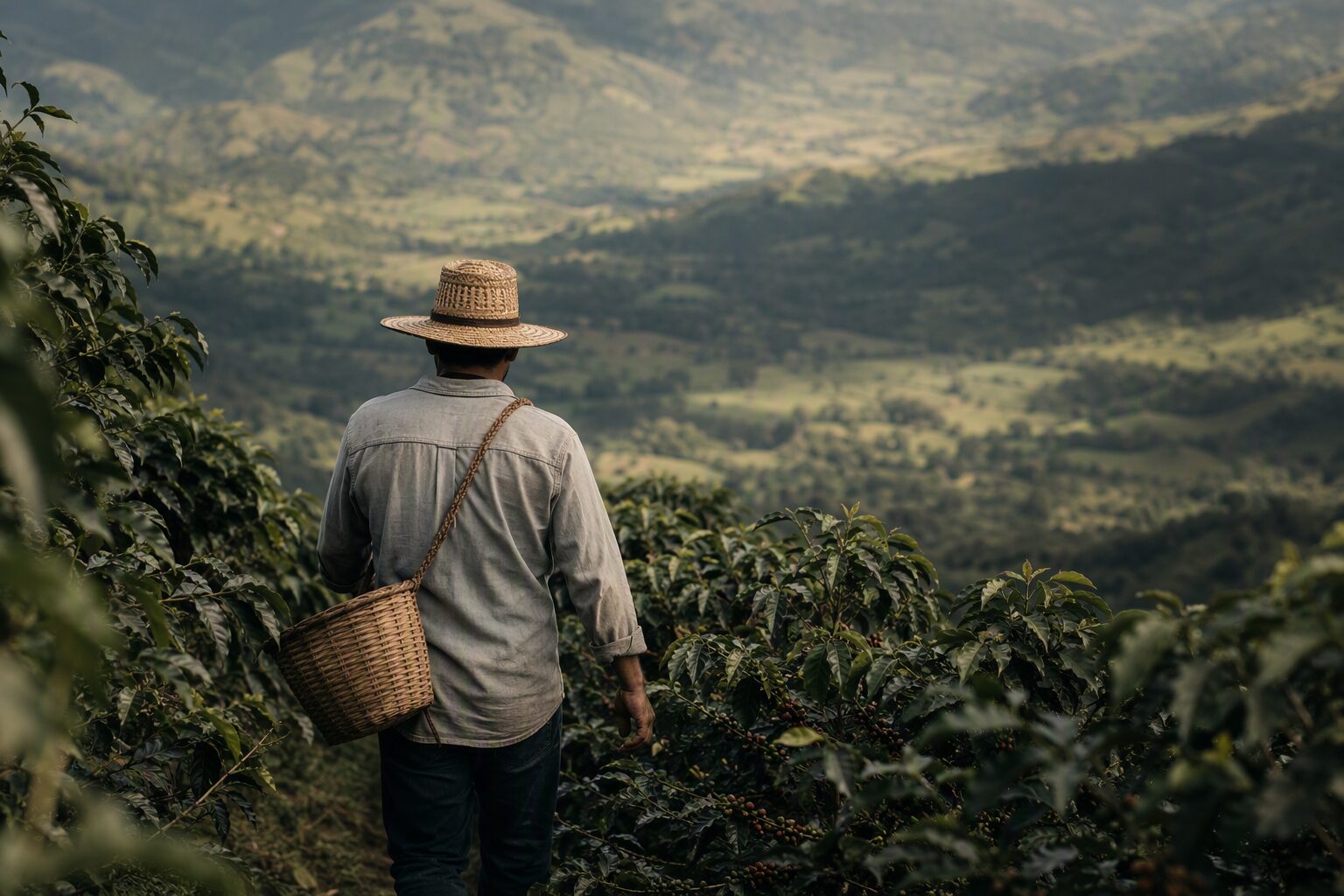
Colombia is one of the world's largest Arabica producers. Coffee grows on small farms on the slopes of the Andes, mostly between 1,200 and 2,000 metres, and most of it is washed. Colombian coffee is known for bright acidity, caramel sweetness and red-fruit and citrus notes.
Main regions
| Region | What stands out |
|---|---|
| Huila | Sweet and fruity; known for specialty lots |
| Nariño | Very high altitudes; bright acidity, floral notes |
| Cauca | Balanced; citrus and caramel |
| Antioquia | The classic, balanced Colombian cup |
| Coffee Triangle (Caldas, Quindío, Risaralda) | Historic growing region; a UNESCO World Heritage site |
| Tolima, Santander | Sweet, round-bodied coffees |
Two harvests a year
Being close to the equator and mountainous, many Colombian regions have two harvests a year: the main crop and a smaller second crop called the “mitaca”. So fresh Colombian coffee can arrive all year round.
Why washed?
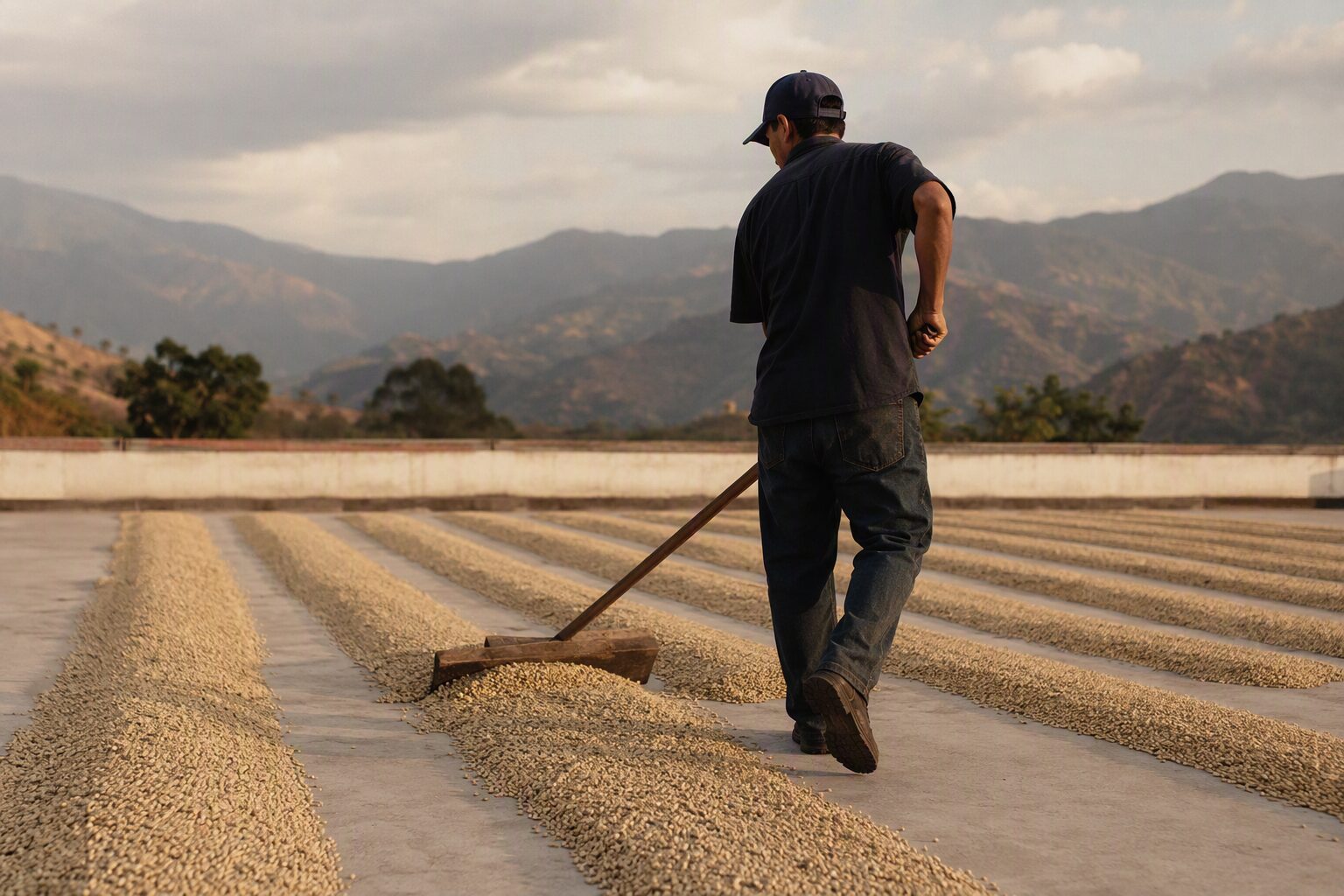
Colombian coffee is traditionally washed: the skin is removed, the sticky fruit layer is broken down by fermentation, and the bean is washed and dried. The result is a clean, bright, balanced cup. In recent years some producers have also been experimenting with other fermentation methods.
Taste and varieties
A typical Colombian coffee has caramel, red-fruit and citrus notes, a medium body and lively acidity. Common varieties are Caturra, Castillo, Colombia and Typica.
“Colombian coffee is bright and sweet; it shows its best in filter methods such as the V60.”
— Roaster Lab
Colombia at Roaster Lab
One of our coffees of the month, Colombia Monteblanco, was Rodrigo Sánchez Valencia's Purple Caturra lot from Acevedo, Huila (1,800 m, 85 points); it is sold out. Our specialty coffees change every month; see this month’s coffees. For filter coffee, follow our V60 guide.